Powered By


I am being a fly in the ointment here. Peptide therapeutics are on the rise in gerontological medicine targeting, weight loss, memory, hormonal decline, and anxiety plus a variety of other things. How safe are they for people with PBC?
@A myPBCteam Member I was previously taking BPC157/TB500 for a herniated disc but didn't specifically notice any benefits other than the pain stopped. Then I researched a mix of KPV/BPC157/TB500/GHK-CU (otherwise referred to as KLOW). The latter was super helpful for inflammation, my back pain went completely away, and it made my skin super soft (thinking that was the GHK-Cu which there has been multiple topical studies done on it's benefit in skin heal). I can't comment on how it impacted my liver though if that is the reason you are wondering if anyone has tried any.
yes, SS31 was also just approved for Barth Syndrome (I believe in the last 12-24 months). Larazotide is a very interesting one for celiac that actually made it to phase 2 in humans and was showing alot of promise but they scrapped the research when they were told they needed a bigger population to study on.
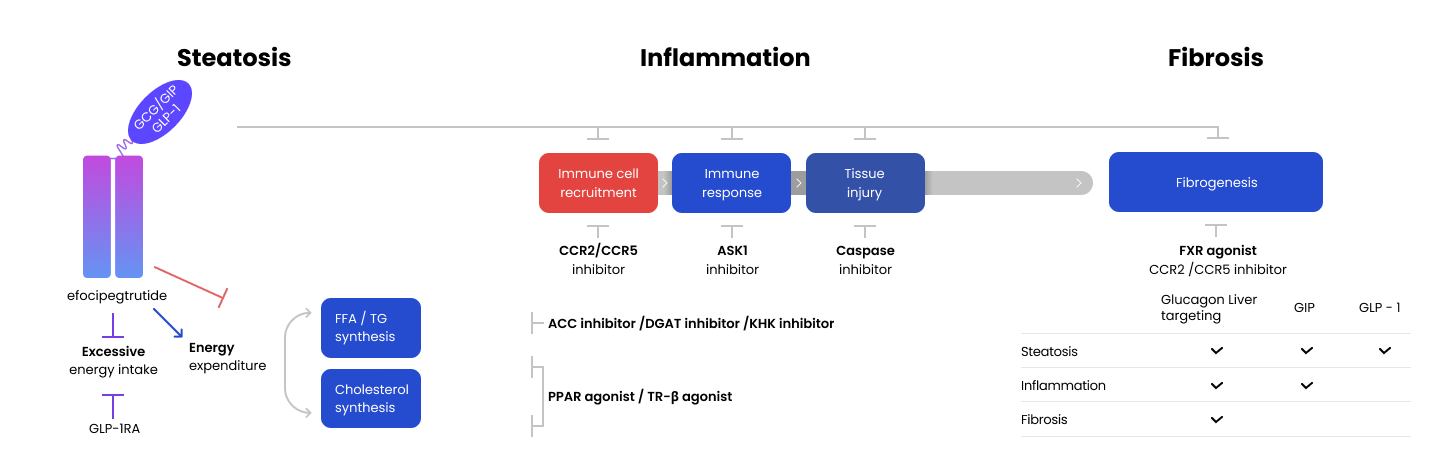
They were actually researching a GLP peptide for PBC patients: Efocipegtrutide . It looks to be similar to Tirzepatide in make-up. Would be interesting to hear someone's experience with that. https://www.hanmipharm.com/science/pipeline/foc...
Hello @RebbecaButtons
I am always the fly in the ungt. LOL! I like to ask hard questions and I would guess some of our PBC colleagues are on these. I put it out there as ‘Food For Thought’ and discussion.
I have done extensive research on these peptides as a researcher and know of the grey providers in the States and Canada, cost and availability. Know they are only recommended for research purposes (also written on the bottle) except for FDA approved GLP-1 Tirzepatide and PT-141 (aka Bremelanotide-used for sexual dysfunction); know that dosing is a problem and have only been used in mouse and rat models for the most part.
I’m going to a PBC conference in October in Edmonton, Alberta, Canada -we have 4 top notch hepatologists presenting and will ask the question! I will bring back the info.
In the mean time Id like to hear if anyone is on these-even one.
PS What alarms me the most is that non medical people are selling this stuff for Corevia Labs in the States.
Is a fly in the ointment a good thing? lol.
I've done a lot of research into the peptides and specifically ones that are not easily available (ie Grey Market). I'm not sure how things work in Canada but it is possible to find a provider in the states to work with that can make suggestions on peptide use... but they are generally out of pocket and "provider" becomes a loose term. Sooo, choose your own adventure and risk tolerance.
Many of the peptides aren't metabolized by the liver and some of them have beneficial anti-inflammatory mechanisms. Often they are given via injection but you can also find some available in capsule formula. You mentioned Tirzepatide which is one that is now being studied extensively (and also used off label) in individuals with autoimmune and inflammatory conditions (endometriosis, rheumatoid arthritis, etc). They are trying to understand more specifically how the GLPs impact inflammation because this was not the initial target. However, when studied for weight loss they did show how beneficial they could be for fatty liver disease, liver health, metabolic health and cholesterol levels. I think we are using them at much higher doses than is necessary and I am hoping to see microdosing become a more common practice (not everyone needs to lose 100lbs in 2 months).
Semax is a nootropic so it acts more like an ADHD drug which could be used to support the heavy fatigue days but my understanding it works more on your brain (ie concentration, memory, learning, etc) than overall stimulation. But other peptides like KPV, ARA290, GHK-Cu, etc could be beneficial for their anti-inflammatory, anti-cytokine profiles... but knowing everything that is going on inside your body is really important for testing them given they have not been studied extensively in humans. But the studies that have been done have shown positive outcomes.
Obviously this is not something your hepatologist would recommend or even condone.
Yes wondering how these impact the liver. A friend is on 3 of them (2 not approved and for research purposes only) with a cardiac hx and was told by family doc that they were ok to take!
I would have asked my cardiologist!


 Continue with Facebook
Continue with Email
Continue with Facebook
Continue with Email

 Join
Join




 Your Privacy Choices